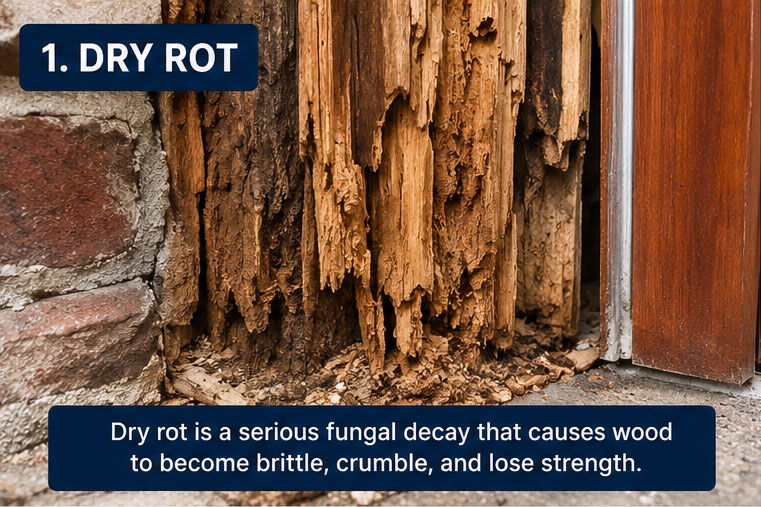
If you have noticed signs of dry rot in your Great Dunmow property, taking action early can help prevent timber damage from becoming more extensive. Dry rot is a serious fungal decay that can affect wooden structural components, including floor joists, floorboards, skirting boards, roof timbers and other timber within a building.
At Dry Rot Essex, we provide professional dry rot treatment in Great Dunmow and throughout the surrounding Essex area. Our services are designed to identify the cause of timber decay, assess the extent of the problem and recommend appropriate remedial work.
Dry rot can sometimes develop in concealed areas, meaning the visible damage may not represent the full extent of the problem. The fungus can affect timber beyond the initial area where symptoms have been discovered, particularly where damp conditions remain untreated.
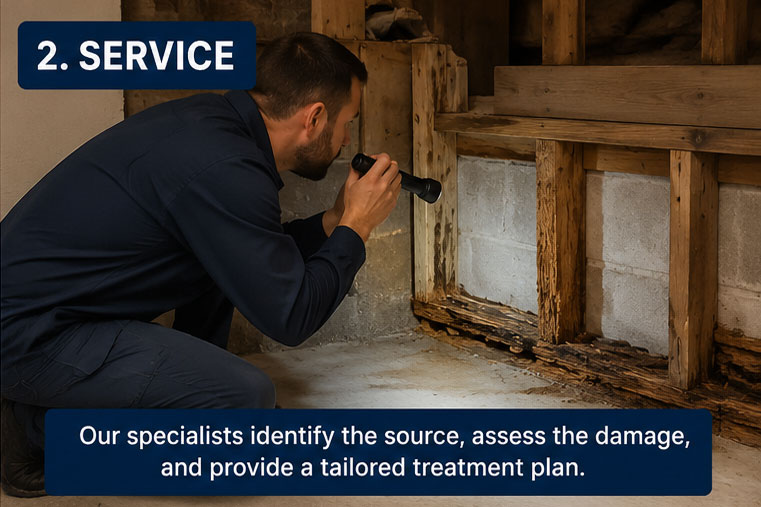
Our Great Dunmow dry rot treatment service focuses on investigating the condition of affected timber and identifying the moisture source that may be contributing to fungal decay.
Potential causes can include leaking pipes, defective gutters, penetrating damp, water ingress, condensation and inadequate ventilation. Addressing these issues is an important part of controlling dry rot.
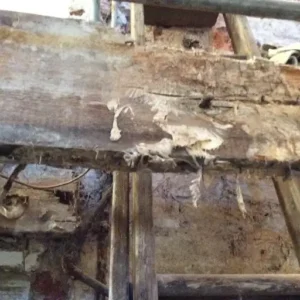
There are several warning signs that may indicate a dry rot problem. Property owners in Great Dunmow should look out for:
These symptoms can also be caused by other forms of timber decay, including wet rot or woodworm. A professional inspection can help establish the likely cause.
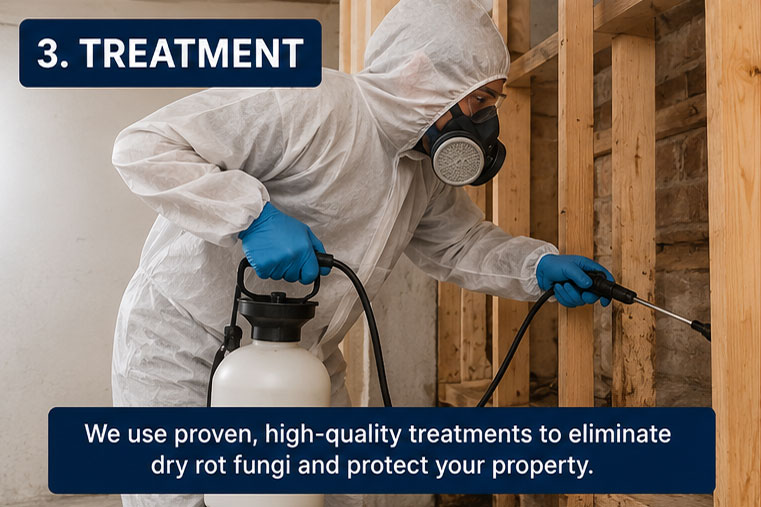
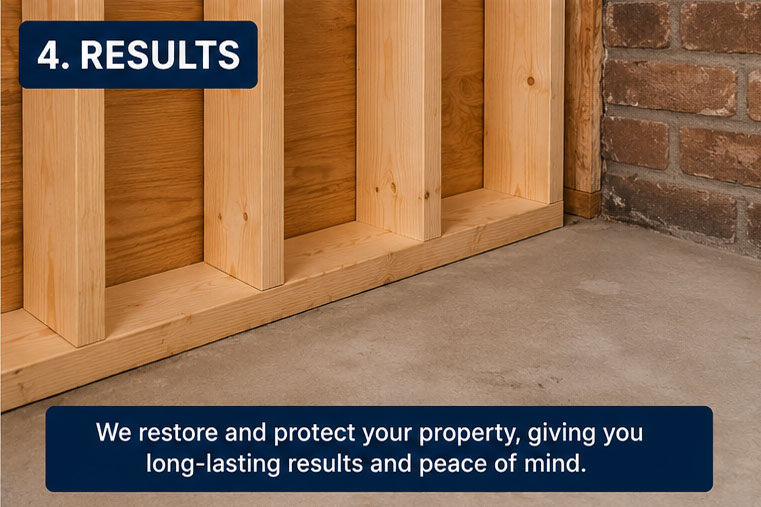
Despite its name, dry rot requires moisture to establish and develop. Damp timber, poor ventilation and persistent water ingress can create favourable conditions for fungal growth.
For effective dry rot treatment in Great Dunmow, it is therefore important to investigate the underlying moisture problem rather than concentrating solely on the damaged timber.
Depending on the property, remedial work may involve improving ventilation, repairing leaks, resolving water ingress or dealing with other damp-related issues.
A detailed inspection can help establish which areas of timber have been affected. Depending on the circumstances, this may include examining floor joists, floorboards, skirting boards, roof timbers and other wooden components.
Where timber has been significantly weakened, sections may need to be repaired or replaced. The appropriate solution will depend on the extent of the damage and the condition of the surrounding structure.
Our approach is to assess the individual property and provide practical recommendations based on the condition of the timber and the source of the moisture.
We provide dry rot treatment for properties in Great Dunmow, helping homeowners and property owners deal with suspected timber decay.
Great Dunmow has a mixture of older and newer properties, and different buildings can have very different construction methods and ventilation arrangements. Older properties can sometimes require particular attention where timber, damp and ventilation issues overlap.
If you have discovered damaged timber, a musty smell or unexplained deterioration around floors, walls or other wooden areas, professional advice can help determine whether dry rot could be responsible.
If you are searching for dry rot specialists in Great Dunmow, dry rot treatment near Great Dunmow, or a dry rot survey in Great Dunmow, Dry Rot Essex can provide professional timber and damp-related services.
We can assess suspected timber decay and help property owners understand the potential cause of the damage and the type of remedial work that may be required.
Our dry rot treatment services in Great Dunmow can also cover nearby Essex locations, including:
This provides a local option for anyone searching for dry rot treatment in Great Dunmow and surrounding Essex areas.
Ignoring timber decay can allow the underlying problem to continue developing, particularly if damp conditions remain present.
Early investigation can help identify the source of moisture and establish the extent of timber damage. Dealing with the issue sooner may also help prevent unnecessary deterioration and more extensive remedial work.
If you suspect dry rot in your property, professional assessment is recommended rather than attempting to diagnose the problem from visible symptoms alone.
If you require dry rot treatment in Great Dunmow, contact Dry Rot Essex to discuss your property and the signs of timber decay you have noticed.
From dry rot inspections and timber assessments through to remedial treatment and damp-related solutions, we provide professional support for property owners throughout Great Dunmow and surrounding Essex.
Don’t allow suspected timber decay to go unchecked. Contact Dry Rot Essex today to discuss your Great Dunmow dry rot problem.
What causes dry rot in Great Dunmow properties?
Dry rot develops in damp conditions where timber has sufficient moisture to support fungal growth. Water leaks, penetrating damp, poor ventilation and water ingress can all contribute.
What are the first signs of dry rot?
Potential signs include brittle or crumbling timber, cracked wood, fungal growth, musty smells and damaged floorboards or skirting boards.
Can dry rot affect structural timber?
Yes. Dry rot can affect important wooden components such as joists, floorboards and roof timbers. The seriousness depends on the extent of the decay.
Can dry rot come back after treatment?
If the source of moisture is not properly addressed, timber decay may potentially return or continue. Identifying and controlling damp conditions is therefore an important part of treatment.
Do you provide dry rot treatment near Great Dunmow?
Yes. Dry Rot Essex provides dry rot and timber-related services in Great Dunmow and surrounding Essex locations.
Our experienced team provides professional dry rot treatment throughout Essex, identifying the source of the problem before carrying out effective remedial work that protects your property for the future.
Address: 1 Woodhouse Lane, Chelmsford, CM1 7EU
Telephone: 07379 221549
Working Days/Hours:
Mon – Fri / 9:00 AM – 6:00 PM
Sat 9:00 AM – 2:00 PM
Sun – CLOSED