
WOODWORM INSPECTION & TIMBER PROTECTION · ESSEX
Woodworm Treatment & Timber Protection in Essex
Concerned about flight holes, fine timber dust or damaged floorboards? We help property owners understand the signs, assess affected timber and consider sensible next steps.
WOODWORM INSPECTION & TIMBER PROTECTION · ESSEX
Woodworm Treatment & Timber Protection in Essex
Concerned about flight holes, fine timber dust or damaged floorboards? We help property owners understand the signs, assess affected timber and consider sensible next steps.
UNDERSTAND THE SIGNS
Is Woodworm Affecting Your Property?
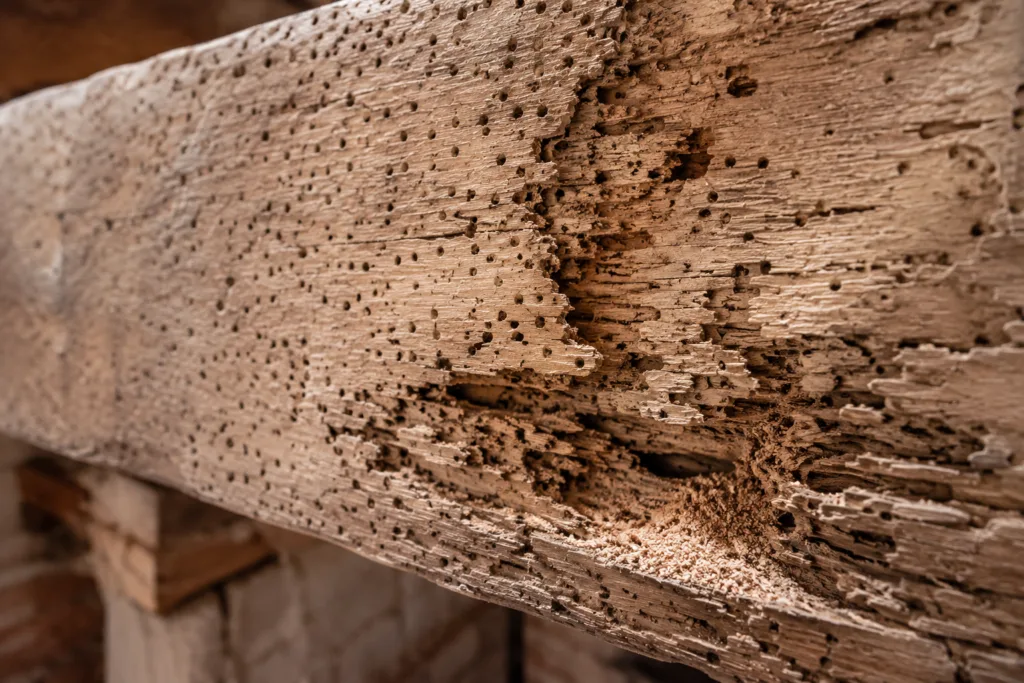
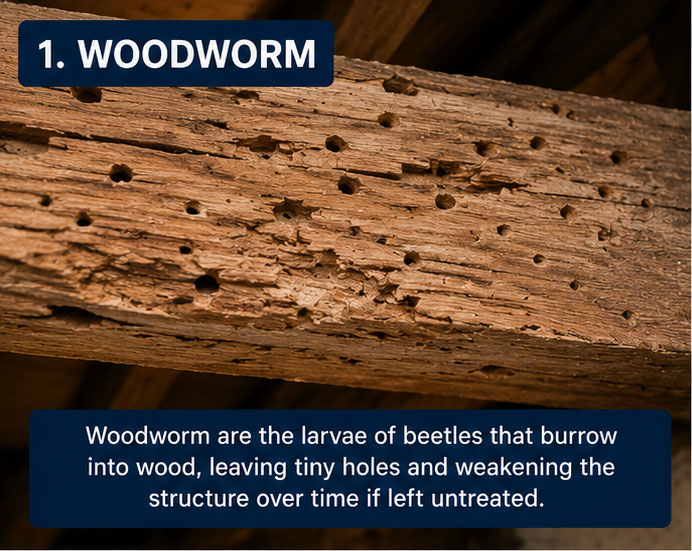
Woodworm is the common name for the larvae of several wood-boring beetles. Depending on the species and timber involved, an infestation may affect floorboards, joists, roof timbers, stairs and other wooden features. Flight holes alone do not confirm that insects are still active, so it is important to assess the wider evidence before deciding on treatment.
Small flight holes
Small holes in timber can indicate that adult beetles have emerged. Their size, pattern and location help inform an inspection.
Fine dust or frass
Powder-like material beneath timber may be associated with beetle activity, although other sources of dust should also be considered.
Soft or weakened wood
Damage inside timber can reduce its strength. Suspected deterioration in joists, beams or roof timbers should be assessed promptly.
INSPECTION BEFORE RECOMMENDATION
Find Out What Is Happening Inside the Timber
Old flight holes can remain visible long after an infestation has ended. A considered recommendation takes account of the type and condition of the wood, the signs present and whether there is evidence of recent activity.
An inspection can help clarify the likely issue and whether treatment, repair or further investigation may be appropriate.
- Inspect affected areas and accessible timber
- Consider the pattern of holes and timber dust
- Assess visible deterioration and possible impact
- Explain suitable next steps based on the findings
Good to know: not every hole indicates an active infestation, and not every timber problem is caused by woodworm. Assessment helps avoid unnecessary treatment.
A CONSIDERED APPROACH
Woodworm Treatment and Timber Repair Options
The right response depends on the evidence found during inspection. We explain the options clearly so you can decide how to proceed with confidence.
1. Assess activity
Review the signs and timber condition to help distinguish possible active infestation from historic damage.
2. Consider treatment
Where treatment is justified, discuss suitable measures for the affected timber and conditions contributing to the problem.
3. Plan timber repairs
If wood has been significantly weakened, repair or replacement may need to be considered alongside any appropriate treatment.
HOMES, RENTALS & COMMERCIAL PREMISES
Protecting the Timber That Matters
Woodworm concerns can arise in older homes, roof spaces, suspended timber floors and buildings undergoing renovation. The priority is to understand whether the timber is sound, whether activity may be ongoing and what work is proportionate.
If joists, beams or other load-bearing timber appear weakened, obtain appropriate professional advice about its structural condition before relying on it.
YOUR QUESTIONS ANSWERED
Woodworm Treatment FAQs
Answers to common questions from property owners in Essex.
How can I tell if woodworm is active?
Fresh dust or frass, newly formed flight holes and other signs may suggest activity, but no single sign proves it. The timber, location and wider evidence should be assessed together.
Does every flight hole need treatment?
No. Holes can be historic and may remain visible after beetle activity has stopped. An assessment helps establish whether treatment is warranted rather than treating timber solely because holes are present.
Can woodworm damage structural timber?
It can, depending on the beetle species, extent of infestation and condition of the timber. If joists, roof timbers or other structural wood appear weakened, arrange a professional assessment promptly.
Will treatment repair timber that has already been weakened?
Treatment may address an infestation where appropriate, but it does not restore lost timber strength. Damaged sections may also require repair or replacement, depending on the findings.
Do you cover areas across Essex?
We provide woodworm and timber-protection advice for properties across Essex. Where timber preservation or moisture-related concerns also need attention, explore our timber preservation service and moisture investigation service. Contact us with your town or postcode and a brief description of the problem to discuss the next step.
What should I do before an inspection?
If possible, keep the affected area accessible and avoid brushing away all evidence of dust or debris before it can be seen. Do not disturb potentially weakened structural timber.
Related Damp and Timber Services
Explore related services or contact us to discuss the signs you have noticed.
Concerned About Woodworm in Your Essex Property?
Arrange an inspection to discuss the signs, understand the condition of affected timber and identify sensible next steps.