Call Us Today07379 221549
Email Usinfo@dryrotessex.co.uk
Areas We CoverAll Essex Areas
Get A Free Quote
Email Usinfo@dryrotessex.co.uk
Areas We CoverAll Essex Areas
Get A Free Quote
⌖Covering All Essex Areas
For a Broomfield property, an inspection should identify damaged timber and investigate why moisture is persisting, since treating the wood alone may leave the cause unresolved. Water entering around roof details, leaking pipes, defective gutters or moisture trapped in poorly ventilated spaces can all contribute to decay, and treating the timber without correcting the cause may allow the problem to return. Our moisture investigation service (see also our dry rot survey service in Essex) can help assess the underlying source.
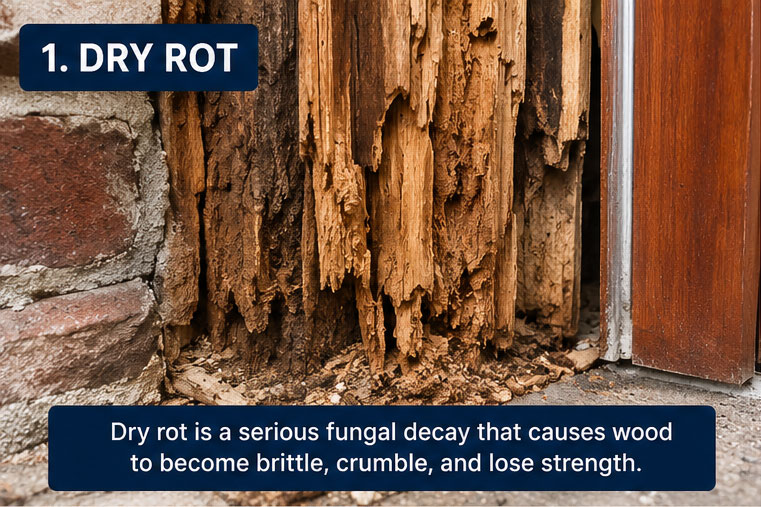
Warning signs can include weakened timber, cracking, cuboidal splitting, fungal growth and a persistent musty odour. Damage can sometimes be concealed beneath flooring, behind skirting or within wall and floor junctions.
The inspection follows the signs back to possible moisture entry points, such as a leaking supply pipe, a failed roof or window junction, overflowing rainwater goods or damp within a poorly ventilated floor void. It is important to distinguish the source of moisture from the visible damage, because different causes need different remedies. For example, repairing a plumbing leak will not resolve a separate ventilation problem, and replacing timber without dealing with continuing water ingress can lead to further deterioration. An assessment should therefore consider the building as a whole rather than focus only on the most obvious damaged area.
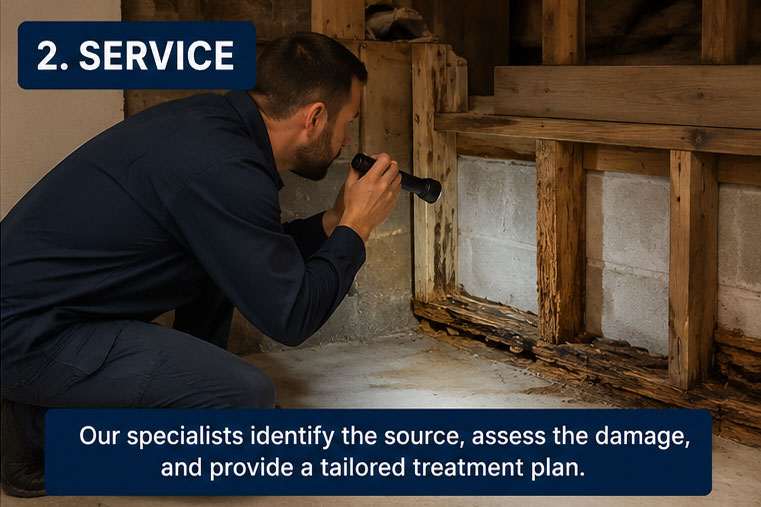
A dry rot inspection normally begins with a discussion of the symptoms, when they first appeared and whether the property has had leaks, previous damp work or changes to its ventilation. Accessible timber and surrounding surfaces can then be examined for signs of decay, with particular attention paid to places where moisture may have collected. Depending on access and the findings, it may be necessary to inspect areas around skirting boards, floor edges, under-floor spaces or other concealed timber.
Not every patch of discoloured wood or musty smell is caused by dry rot. Other forms of fungal decay, condensation and unrelated moisture problems can produce similar warning signs. Identifying the likely cause helps avoid unnecessary work and allows any recommendations to reflect the condition of the property. Where an area cannot be inspected fully, that limitation should be made clear before decisions are made about repairs.
Once the likely cause and extent of the problem have been assessed, the next step is to explain which repairs may be appropriate. For homeowners, it is useful to keep a record of any leaks, repairs or changes in the appearance of the affected area and share this during the visit. Avoid covering up damaged timber before it has been assessed, as this can make it harder to understand how far the problem extends. If an area feels unsafe or a floor appears significantly weakened, avoid placing weight on it and seek suitable professional advice.
Choosing a dry rot treatment plan should be based on the inspection findings rather than a standard package. The aim is to address the moisture conditions, deal with timber that has genuinely been affected and reduce the risk of the same problem returning. The work required can differ between properties, even where the visible symptoms look similar, so a clear explanation of the findings is an important part of deciding what to do next.
Dry Rot Essex provides information and support for property owners in Broomfield and across the surrounding Chelmsford area. If you are unsure whether the signs point to dry rot, another form of timber decay or a separate damp issue, arrange an assessment before committing to extensive repairs. An early investigation can help clarify the likely cause and the most appropriate next step.
Depending on the findings, recommendations may include resolving a leak or other moisture source, improving suitable ventilation, removing timber that is beyond repair and replacing affected sections. The precise work depends on the evidence found on site; no single treatment is right for every building. Readings and visible evidence are considered together; a single damp reading alone does not confirm dry rot.
For Broomfield properties, we compare the damaged timber with nearby building areas to determine the likely extent of decay. Where necessary, concealed or adjoining areas can be investigated before repairs are planned.
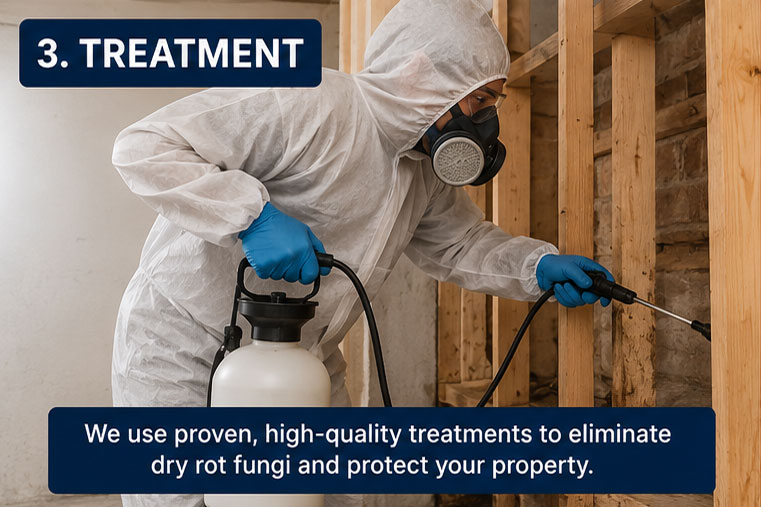
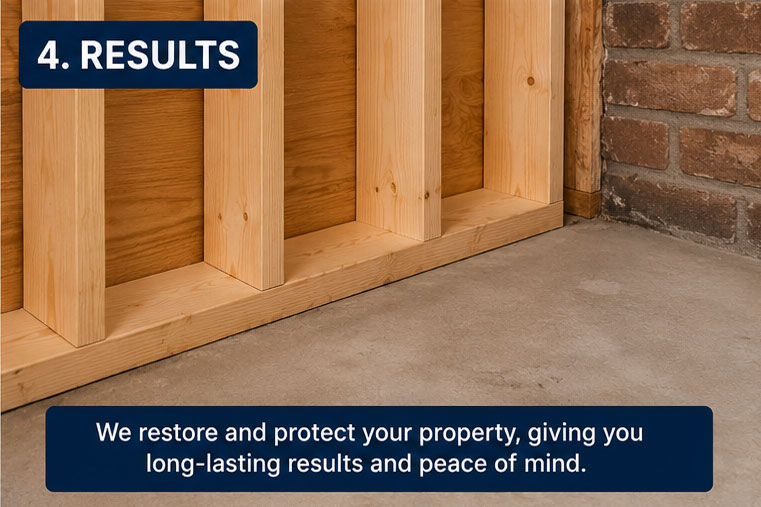
Depending on the findings, treatment may involve removing severely damaged timber, repairing or replacing affected sections and improving moisture control or ventilation. Sound material is retained where practical.
We cover Broomfield and nearby parts of Chelmsford, including Channels, Chignal, Great Waltham, Little Waltham and Springfield, as well as other communities across Essex. If you have noticed a musty smell, soft floorboards or recurring damp, make a note of where and when it appears; these details can help focus the inspection, although the source and extent of decay must be confirmed at the property. More locations are listed on our Areas We Cover page.
Several problems can affect timber in damp buildings. Our rising damp and woodworm services provide further information about related issues.
No. The extent varies considerably, so the correct approach depends on the location and condition of the affected timber.
Improving airflow can help reduce moisture in suitable areas, although leaks and other defects must also be addressed.
Contact us through our contact page to discuss your concerns.
Broomfield is a village just north of Chelmsford, with established residential streets, period properties and more modern homes. As with properties across Essex, timber condition can vary with a building’s age, construction and maintenance history. Roof leaks, plumbing faults, defective gutters and restricted ventilation can allow moisture to persist. If you notice a musty smell, cracking timber or deterioration around floorboards and skirting, an inspection can help establish the cause. These signs do not automatically mean dry rot is present, so the timber and moisture conditions should be assessed before treatment is recommended.
If you are concerned about dry rot treatment in Broomfield and have noticed damp smells, damaged timber or fungal growth, contact Dry Rot Essex for a professional assessment and practical advice. Call 07379 221549 or use our contact page to discuss your concerns.