
Call Us Today07379 221549
Email Usinfo@dryrotessex.co.uk
Areas We CoverAll Essex Areas
Get A Free Quote
Email Usinfo@dryrotessex.co.uk
Areas We CoverAll Essex Areas
Get A Free Quote
⌖Covering All Essex Areas
For Colchester properties, crumbling timber or a persistent musty smell can justify checking concealed floor voids, roof junctions and adjoining masonry where moisture may be affecting more than one timber component. Colchester has a broad mix of property types and building alterations, so the cause may be hidden beneath floors, around roof details or behind internal finishes. Dry Rot Essex provides professional dry rot treatment in Colchester, with advice based on the evidence found during inspection. If the source of damp is uncertain, our moisture investigation service can help establish what needs addressing.
In Colchester, the survey records the condition of affected and adjoining timber and identifies moisture issues that should be addressed before repairs begin. Read about our dry rot surveys in Essex for more information.
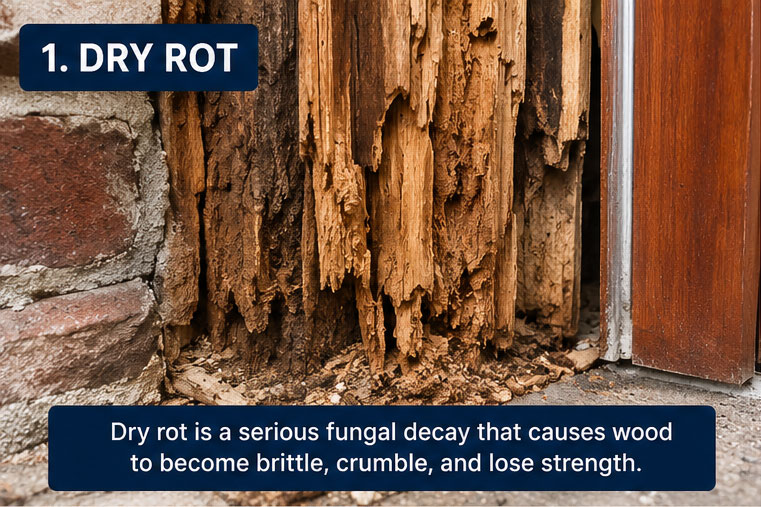
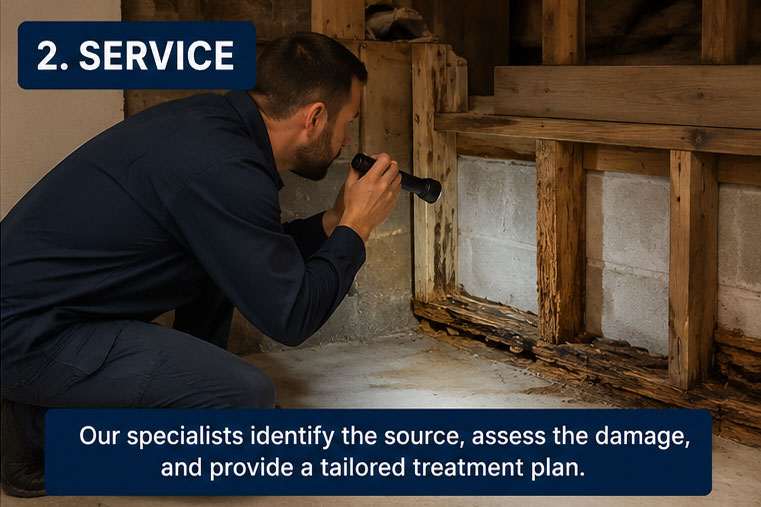
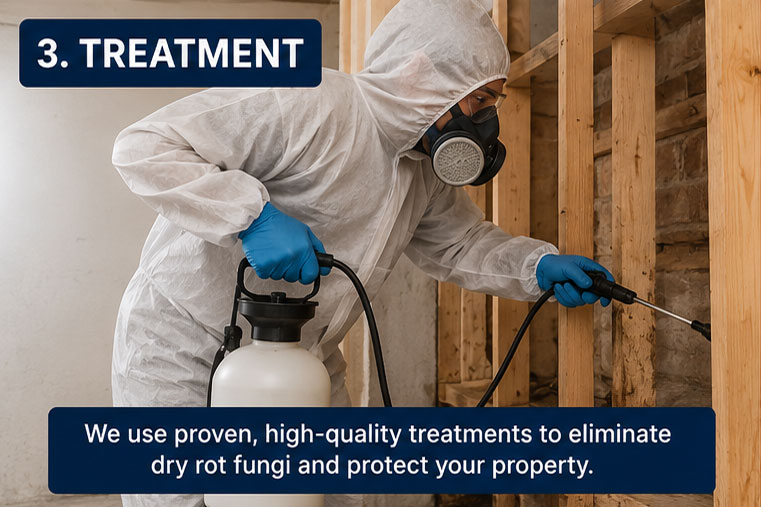

A dry rot survey can be useful where timber is brittle, cracked, weakened or showing fungal growth. It can also help when there is a persistent musty smell or unexplained deterioration around floors, skirting, walls or roof timbers.
Because similar symptoms can occur with wet rot and woodworm, diagnosis should be based on the condition of the timber and the building environment rather than appearance alone.
Dry rot needs moisture. Potential sources include leaking pipes, damaged roofs or gutters, penetrating damp, condensation and inadequate ventilation. Moisture can sometimes be present in concealed spaces where the first visible sign appears some distance away.
Our assessment considers how the affected timber relates to nearby walls, floors and other building elements. For example, damage close to an external wall may call for checks around rainwater goods and pointing, while decay under a floor may require attention to leaks or airflow. Correcting the source of moisture is an important part of controlling timber decay.
Different buildings can present different timber and ventilation challenges. Older properties may have traditional timber floors and enclosed voids, while extensions and modern alterations can introduce changes in ventilation or moisture movement.
We assess the individual circumstances rather than assuming that one treatment approach is suitable for every Colchester property.
If timber has been significantly weakened, repair or replacement may be necessary. The extent of the work depends on how far the decay has progressed and whether the affected wood is structural.
Our recommendations can cover timber assessment, remedial treatment and investigation of the damp or moisture conditions contributing to the problem.
Our Colchester service includes nearby areas such as Lexden, Stanway, Mile End, Wivenhoe, West Bergholt and Rowhedge, as well as communities towards Tiptree and Marks Tey. When contacting us, mention the room or part of the building where you have noticed damage and whether there has been a recent leak, roof repair or recurring damp patch. We also cover wider Essex locations.
For a fuller list, visit our Areas We Cover page. If your location is not listed, contact us to confirm availability.
If timber is deteriorating without an obvious explanation, or damp keeps returning after previous repairs, it is sensible to investigate rather than repeatedly treating the visible symptom. Early assessment may help establish whether fungal decay is present and where the moisture is coming from.
This can be especially important when floors, joists, roof timbers or other important wooden components appear affected.
Can dry rot affect a whole building?
The extent varies. Dry rot can affect timber beyond the first visible area where moisture and suitable conditions remain.
Is a musty smell proof of dry rot?
No. A musty smell can have several causes, but alongside timber deterioration it can justify further investigation.
Can dry rot affect floor joists?
Yes. Structural timber such as floor joists can be affected and should be assessed where decay is suspected.
Do you provide dry rot treatment near Colchester?
Yes. Dry Rot Essex serves Colchester and surrounding North Essex communities.
Possible signs include brittle or cracked timber, damaged skirting, fungal growth and persistent musty smells. An inspection is needed to confirm the cause and extent.
Yes. Timber beneath flooring or behind skirting may be affected, so an assessment should consider surrounding areas as well as visible damage.
A suitable plan should investigate why the timber became damp and address the source where possible, alongside the necessary timber treatment and repairs.
If you are looking for dry rot treatment in Colchester, contact Dry Rot Essex for professional advice. We can discuss the symptoms, investigate suspected timber decay and help identify the appropriate next steps.