Call Us Today07379 221549
Email Usinfo@dryrotessex.co.uk
Areas We CoverAll Essex Areas
Get A Free Quote
Email Usinfo@dryrotessex.co.uk
Areas We CoverAll Essex Areas
Get A Free Quote
⌖Covering All Essex Areas
Dry rot can develop when timber remains damp for long enough to support fungal decay. In Burnham-on-Crouch, the source of damp can vary from one building to another: it may be a roof or plumbing leak, rainwater entering around an external detail, or moisture lingering in a poorly ventilated floor or roof space. The building needs to be assessed on its own evidence rather than assuming the cause from its location or age. We investigate the source of dampness before recommending treatment, rather than simply treating damaged timber.
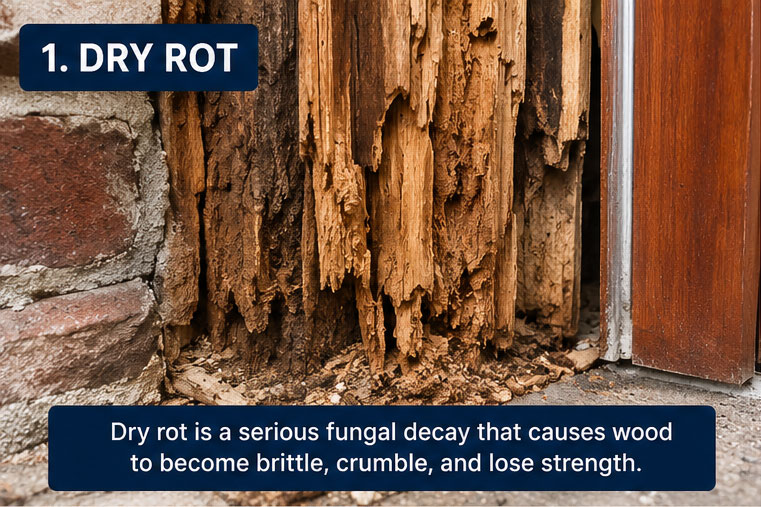
Warning signs can include timber that has become brittle or cracked, cuboidal splitting, fungal growth, a musty smell and damage hidden behind plaster, flooring or skirting. Some symptoms can resemble wet rot, woodworm or general damp damage, so a proper inspection is important.
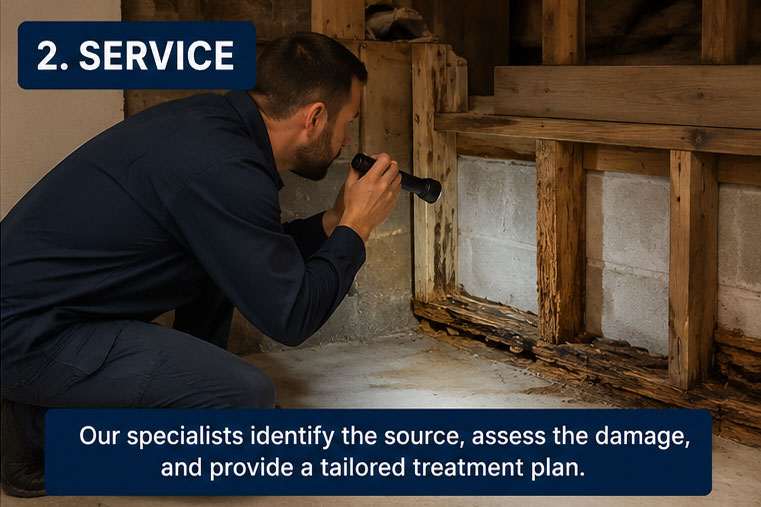
For Burnham-on-Crouch properties, the investigation should trace the moisture source rather than focus only on visible fungal growth. We check likely entry points and nearby building elements, then consider whether damp conditions are affecting other timbers out of sight. Correcting the underlying source is a key part of the plan; damaged timber may still need separate repair or replacement. Our moisture investigation service (see also our dry rot survey service in Essex) can help assess the cause when it is not yet clear.
A survey considers accessible timbers and the surrounding building fabric. We assess the extent of visible decay and identify areas where further opening-up or timber investigation may be appropriate. The findings help determine whether localised repairs or more extensive work are needed.
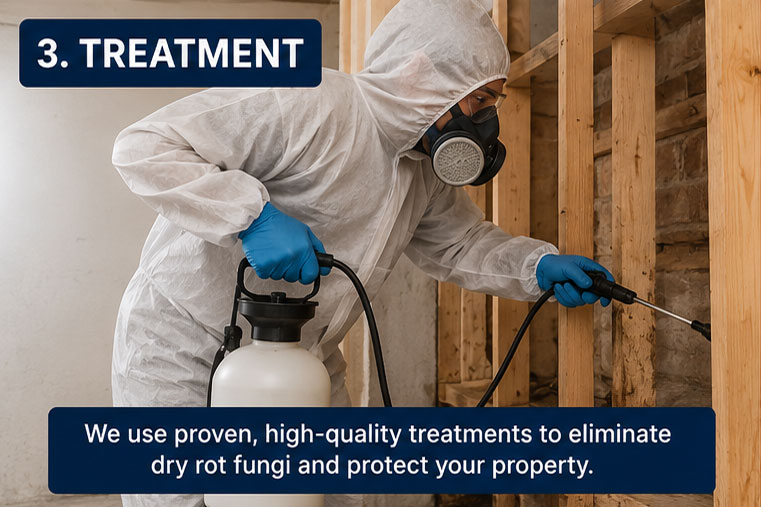
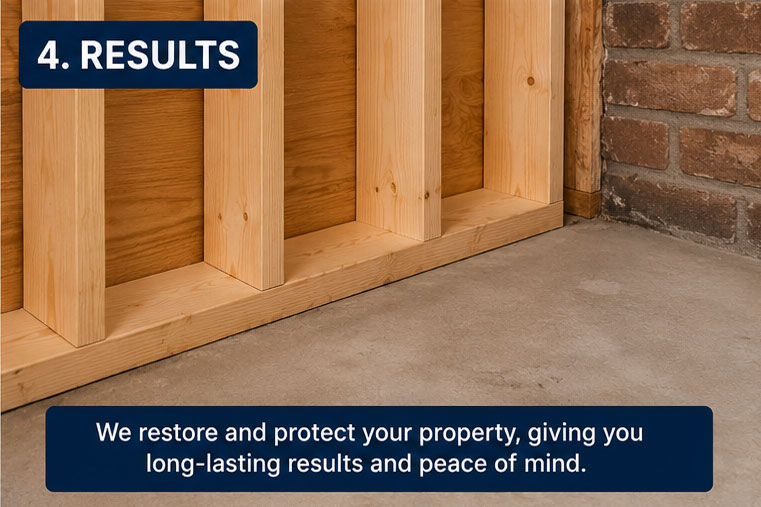
Treatment may involve removing severely affected timber, repairing or replacing damaged sections, improving ventilation and correcting moisture problems. Sound timber is retained wherever practical. The objective is to deal with the decay while protecting the building from further timber deterioration.
We cover Burnham-on-Crouch and nearby communities including Althorne, Southminster, Mayland, Tillingham, North Fambridge, Latchingdon, Maldon and South Woodham Ferrers. For a property in Burnham-on-Crouch or the surrounding villages, tell us whether the symptoms are close to an external wall, beneath a floor or around roof timbers, and whether dampness varies after wet weather. That context can help plan the inspection, although the cause and extent of decay must be confirmed at the property. See our Essex areas we cover for more locations.
Timber decay can occur alongside other building problems. If moisture is entering through masonry, our rising damp service may also be relevant. We also provide woodworm treatment where insect damage is found.
The amount of timber that needs attention depends on how far decay has progressed and whether the affected sections remain structurally sound. An inspection helps establish the scope before work is agreed.
Removing the moisture source is essential, but existing fungal damage and affected timber may still require treatment or repair.
Contact us to discuss the property and arrange a suitable inspection. Visit our contact page to get in touch.
If you are concerned about damaged timber, a musty smell or persistent dampness, professional investigation can establish what is happening and what needs to be done. Contact Dry Rot Essex for advice. Call 07379 221549 or visit our contact page to discuss an inspection. and a tailored assessment.