
Call Us Today07379 221549
Email Usinfo@dryrotessex.co.uk
Areas We CoverAll Essex Areas
Get A Free Quote
Email Usinfo@dryrotessex.co.uk
Areas We CoverAll Essex Areas
Get A Free Quote
⌖Covering All Essex Areas
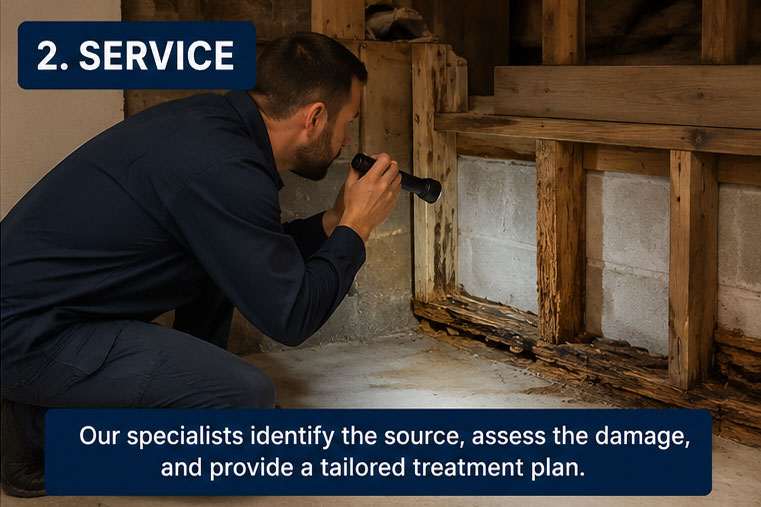
Suspected dry rot in a Chigwell property should be investigated before damaged timber is removed or covered up. Crumbling wood, a persistent musty smell, fungal growth or a floor that has started to feel weak can indicate a moisture-related problem. Dry Rot Essex provides professional dry rot treatment in Chigwell, with recommendations based on the condition of the timber and the cause of the damp. Our moisture investigation service can help when the source needs further assessment.
For a Chigwell property, the inspection considers the location of the damage and checks likely moisture routes, including plumbing, roof details and external walls. Our dry rot survey service can help assess the extent of suspected decay.
Signs can include brittle or crumbly timber, cracking, weakened flooring, deterioration around skirting boards, fungal growth and unusual musty smells. Damp timber or recurring water ingress should also be investigated.
These symptoms can have other causes, including wet rot and woodworm, so professional assessment can help avoid treating the wrong problem.
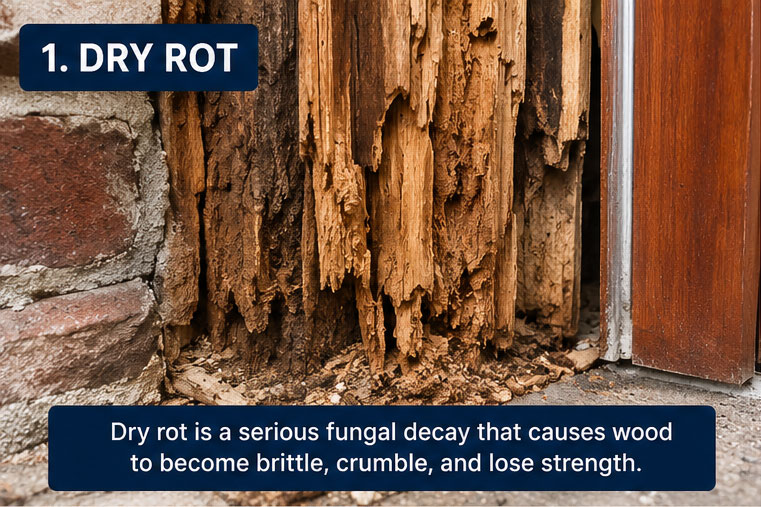

Dry rot cannot develop without suitable moisture conditions. Possible sources include plumbing leaks, defective gutters, roof problems, penetrating damp, condensation and poor ventilation.
Finding and correcting the moisture source is central to an effective repair. For example, timber near a leaking pipe may need a different investigation from damage beneath a roof junction or beside a poorly ventilated floor. Treating the timber without resolving the underlying damp can leave conditions in place for further decay.
In Chigwell, an inspection may need to consider how later extensions, replacement windows or altered floor layouts affect airflow and moisture movement; the relevant checks depend on the actual construction and signs of decay.
Our recommendations are based on the individual property and the extent of the affected timber.
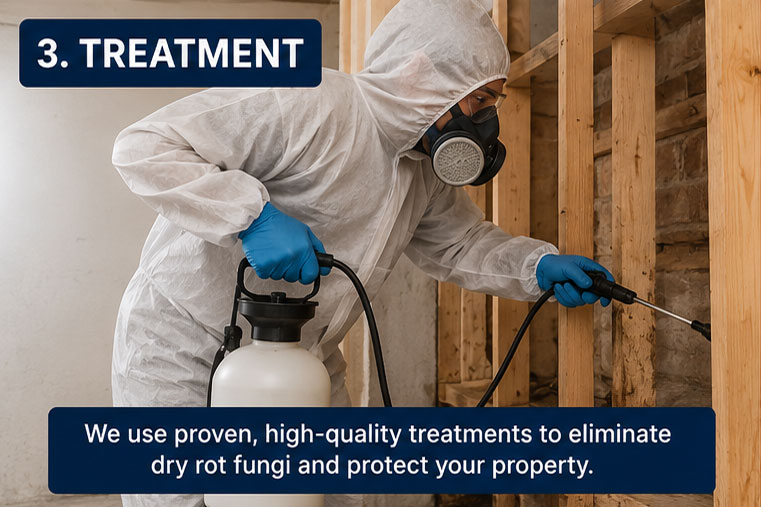
Some affected timber may be repairable, while severely weakened sections may require replacement. The appropriate solution depends on the condition and location of the decay.
Where structural wood is involved, careful assessment is particularly important. Moisture-related defects should also be addressed as part of the wider remedial approach.
Dry Rot Essex covers Chigwell and nearby communities including Chigwell Row, Loughton, Buckhurst Hill, Woodford Green, Hainault and Epping. If you contact us about a property in the area, explain which room or part of the building is affected and whether you have noticed recent leaks, gutter problems or persistent condensation. These details can help focus the investigation. Our service also extends across wider Essex.
For more locations, visit our Areas We Cover page.
Can dry rot be mistaken for wet rot?
Yes. Both are forms of fungal timber decay and some symptoms overlap, so assessment may be needed.
Can dry rot affect skirting boards?
Yes. Skirting and other timber close to damp areas can be affected.
Why does dry rot need moisture?
The fungus requires suitable moisture conditions to establish and develop.
Do you cover Loughton and Buckhurst Hill?
Yes. We provide dry rot services throughout Chigwell and surrounding Essex areas.
Note the affected area and any signs of damp, but avoid covering or removing damaged timber before the cause and extent have been assessed.
Yes. Concealed timber can be affected, so the inspection may need to consider adjoining areas as well as visible damage.
The approach should include identifying and addressing the moisture source as well as dealing with affected timber.
For professional dry rot treatment in Chigwell, contact Dry Rot Essex to discuss suspected timber decay, damp and the appropriate next steps.