
Call Us Today07379 221549
Email Usinfo@dryrotessex.co.uk
Areas We CoverAll Essex Areas
Get A Free Quote
Email Usinfo@dryrotessex.co.uk
Areas We CoverAll Essex Areas
Get A Free Quote
⌖Covering All Essex Areas
In Epping, recurring musty smells, crumbling skirting or a springy floor should be investigated alongside nearby leaks and ventilation, rather than assuming the timber symptoms identify the cause. Dry Rot Essex provides professional dry rot treatment in Epping, starting with an assessment of the affected timber and the conditions that may be allowing decay to develop. See our dry rot surveys in Essex<\/a> for more information.
In Epping, the damaged timber and the source of damp may be in different places; roof junctions, plumbing and enclosed voids can all warrant checks. Tracing the relationship between the damaged wood and the moisture source helps shape the repair plan.
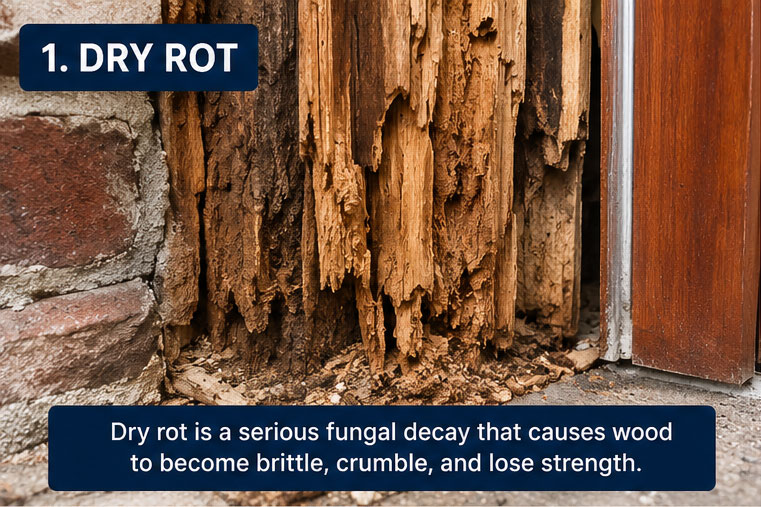
Possible signs include brittle or crumbly wood, cracking, unusual changes to timber, fungal strands, damaged flooring and deterioration around wooden components. These symptoms can overlap with other timber problems, so appearance alone does not provide a definite diagnosis.
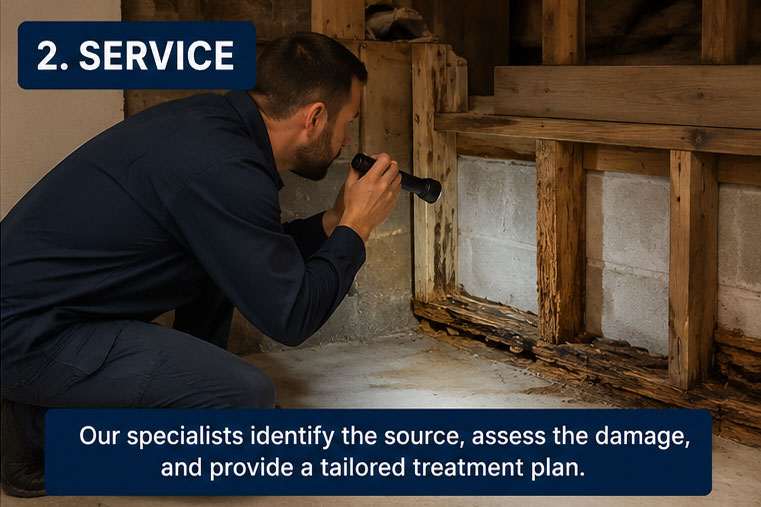
Our assessment considers the condition of the wood and the surrounding building environment.
Despite its name, dry rot needs moisture. Leaking plumbing, roof defects, damaged rainwater goods, penetrating damp, condensation and poor ventilation can all contribute to conditions in which fungal decay develops.
Finding and addressing the moisture source is therefore an important part of controlling the problem. We consider whether water is entering around roof coverings, gutters, windows or external walls, as well as whether plumbing leaks or restricted airflow could be keeping timber damp. The correct remedial plan depends on the evidence at the property, not just the appearance of the damaged wood.
Epping includes older properties alongside more recent homes and extensions. Traditional timber floors, enclosed voids and alterations can each influence ventilation and moisture movement. A local inspection should take these building characteristics into account.
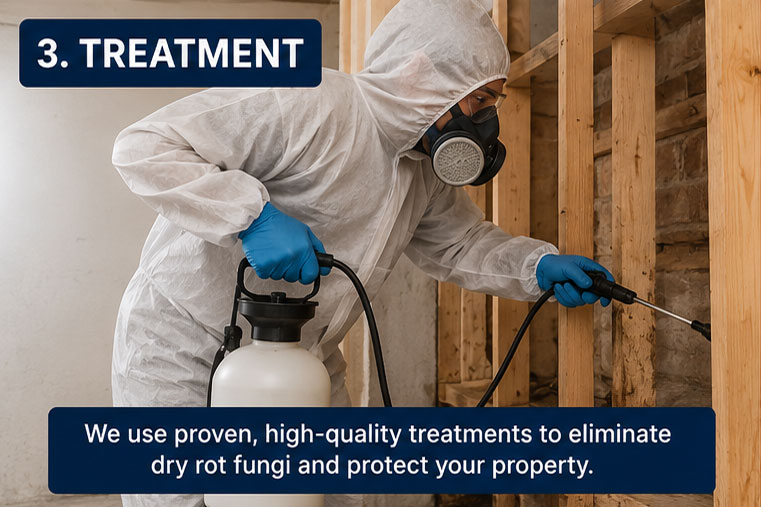
We provide property-specific recommendations rather than relying on a standard treatment for every building.
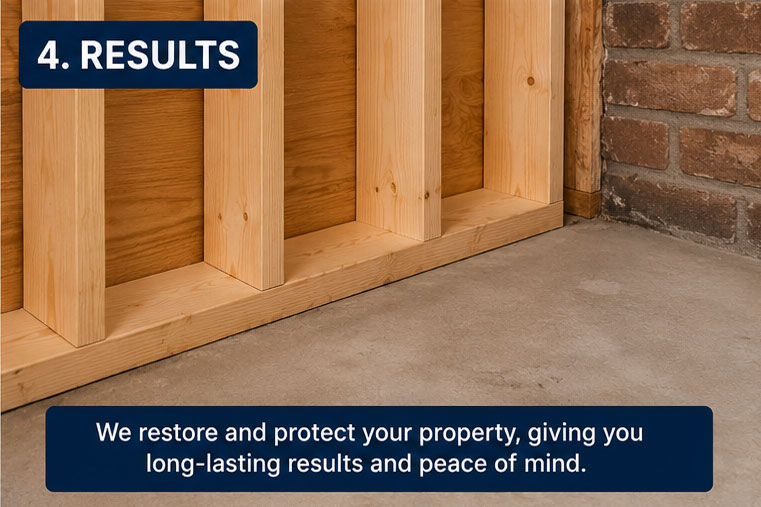
Not every damaged piece of timber requires complete replacement. Where decay has substantially weakened wood, however, repair or replacement may be necessary. Structural components require particular attention because their condition can affect the building.
We can assess suspected timber decay and advise on the remedial work that may be appropriate.
We cover Epping and nearby communities including Theydon Bois, Epping Green, Coopersale, North Weald, Loughton and Waltham Abbey, as well as other parts of the surrounding Essex area. When you contact us, mention whether the damage is near a floor void, external wall, window or roof, and whether you have noticed a recent leak or recurring damp. We also cover wider parts of the county.
Visit our Essex areas covered page or contact us to check your location.
Can dry rot be hidden behind walls or floors?
Yes. Timber decay can develop in concealed or poorly ventilated areas.
Can a roof leak contribute to dry rot?
Persistent water entering timber can create conditions that support fungal decay.
Is dry rot the same as woodworm?
No. Woodworm is caused by insects, while dry rot is fungal timber decay.
Do you provide surveys in surrounding Epping villages?
Yes. We cover Epping and surrounding Essex communities.
Signs may include cracked or brittle timber, fungal growth, damaged skirting and a persistent musty smell. These symptoms should be assessed rather than treated as proof on their own.
Yes. Water may travel through building materials, so an assessment should consider likely sources beyond the visibly affected area.
The work required depends on the inspection findings, including the extent of timber damage and any repairs needed after the moisture source is addressed.
If you need dry rot treatment in Epping, contact Dry Rot Essex for professional advice on suspected timber decay and associated moisture problems.