Call Us Today07379 221549
Email Usinfo@dryrotessex.co.uk
Areas We CoverAll Essex Areas
Get A Free Quote
Email Usinfo@dryrotessex.co.uk
Areas We CoverAll Essex Areas
Get A Free Quote
⌖Covering All Essex Areas
In Great Baddow, timber damage around floors, skirting or wall junctions should be checked for underlying moisture problems before the appropriate repair is decided. Dry rot is one possible cause, but similar symptoms can arise from other forms of timber decay. Where the moisture source is unclear, our moisture investigation service and our dry rot survey service in Essex can help. Dry Rot Essex assesses the affected wood and nearby building details to help identify the cause and determine the next steps.
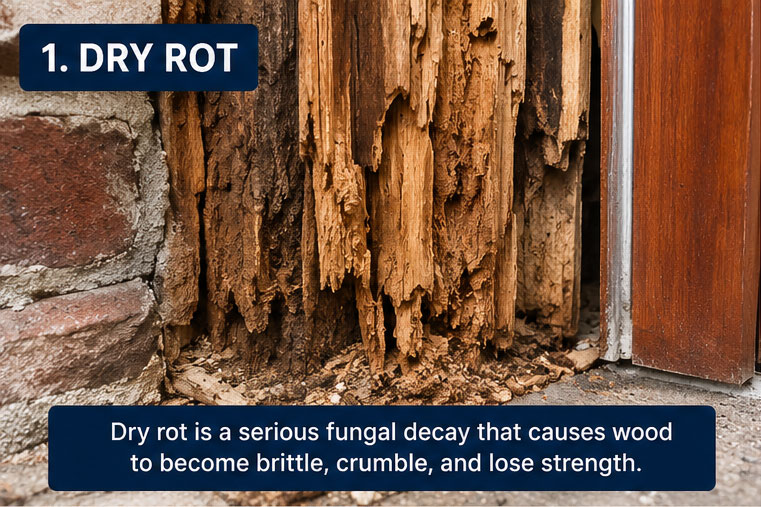
Signs can include weakened timber, cracking, cuboidal splitting, fungal growth and a musty smell. Decay may occur around floors, skirting, wall junctions and other concealed areas.
We consider plumbing leaks, water entering around roof edges or windows, blocked or defective gutters, condensation and limited airflow beneath floors. The position of the damage can offer clues, but the source of damp may be concealed or located some distance away. Resolving the moisture problem is an essential part of reducing the risk of further fungal decay.
In Great Baddow, the assessment looks beyond the first visible symptom where appropriate, checking nearby timber and building junctions that may share the same moisture conditions.
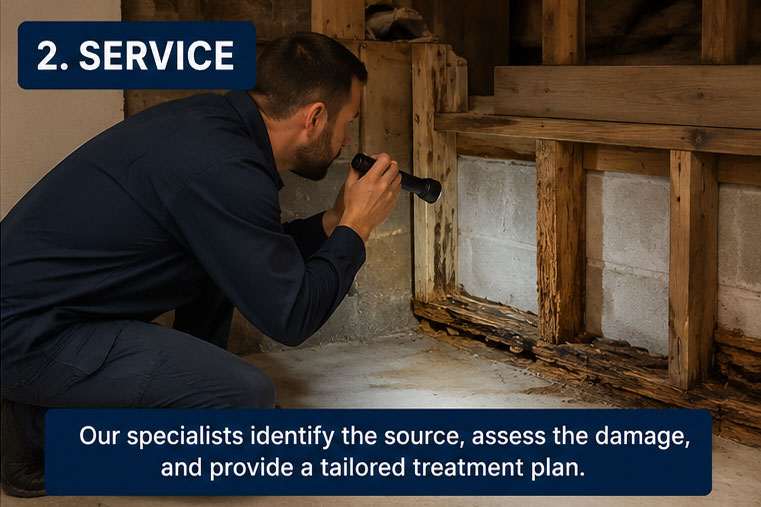
An assessment usually starts by discussing when the damage was first noticed and whether the property has experienced leaks, previous damp repairs or changes to ventilation. The visible timber and surrounding surfaces are then considered together. Where access allows, the inspection may include floor edges, skirting, wall junctions and other places where moisture can remain hidden.
It is important not to assume that every musty smell or patch of damaged wood is dry rot. Condensation, other forms of fungal decay and water-related damage can look similar. Checking the evidence helps establish what is most likely happening and avoids recommending work before the cause is understood. If parts of the structure are concealed or inaccessible, this should be taken into account when deciding on the next steps.
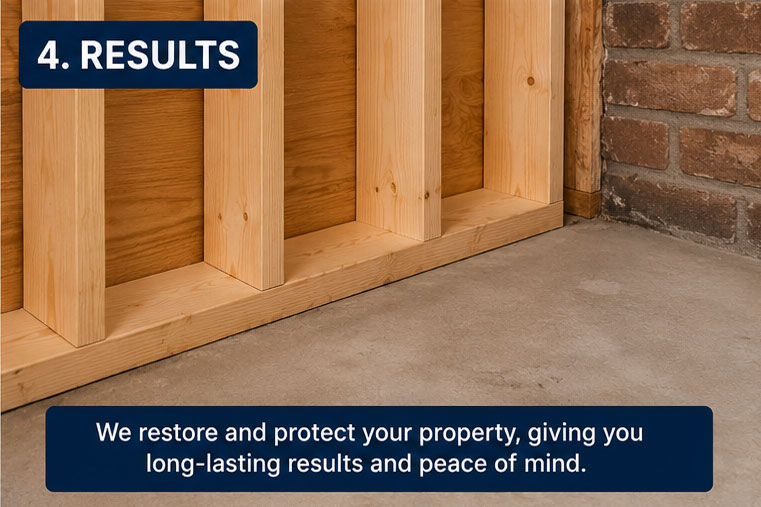
Once the findings are understood, the repair plan should address both the affected timber and the conditions that allowed the problem to develop. Depending on the property, this may involve fixing a leak, improving suitable airflow, removing timber that cannot be retained safely, or repairing and replacing affected sections. The scope varies from building to building, so recommendations should be based on the condition found during the inspection rather than a standard treatment package.
For homeowners in Great Baddow, noting where the symptoms occur and whether they change after rainfall or plumbing use can help explain the history of the problem. Avoid covering up or removing suspect timber before it has been assessed, as this may make it harder to determine the extent of the damage.
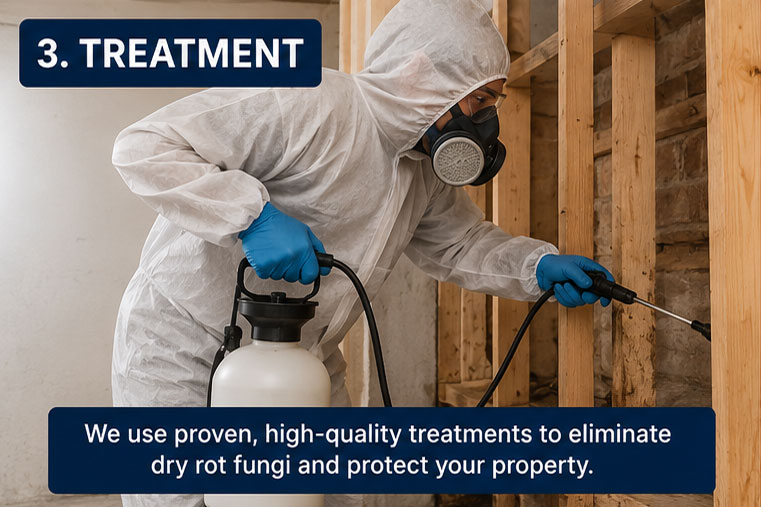
Treatment may include removal of severely affected sections, timber repair or replacement and remedial work to address moisture and ventilation. The appropriate approach depends on the property’s construction and the condition of the timber.
Our service covers Great Baddow and nearby communities including Chelmsford, Galleywood, Sandon, Danbury, Bicknacre and Howe Green. When contacting us, identify the room and the timber affected, and mention whether the signs change after rainfall, heating use or periods when the property is closed up. This history can help guide checks of roof and rainwater details, plumbing and ventilation, although the cause needs to be confirmed by inspection. See our service area page for more locations.
Other building problems can produce similar symptoms. Learn about rising damp and woodworm treatment, or contact us if the cause of timber damage is uncertain.
Dry rot requires suitable conditions, particularly persistent moisture, timber and an environment that allows fungal growth.
Improving airflow can help reduce moisture levels in appropriate areas, although any underlying leak or building defect must also be addressed.
Yes. Contact us through our contact page to discuss an inspection.
If you have noticed damp timber, fungal growth or unexplained deterioration, contact Dry Rot Essex for professional advice and an assessment of the property. Call 07379 221549 or visit our contact page to discuss the signs you have noticed and arrange an inspection.