
What Is Dry Rot? A Complete Guide for Essex Property Owners
Dry rot is a type of fungal decay that can damage timber in houses, flats, commercial buildings and other properties. If it is not identified and dealt with, dry rot can cause significant deterioration to wooden floors, joists, beams, roof timbers, skirting boards, door frames and other timber.
Understanding what dry rot is, what causes it and how to recognise the warning signs can help property owners identify potential problems at an earlier stage.
If you suspect dry rot in your property, a professional dry rot survey in Essex can help establish the extent of the problem and identify potential moisture sources.
What Is Dry Rot?
Dry rot is a form of fungal timber decay caused by fungi that break down the components of wood.
Despite its name, dry rot is associated with moisture. The fungus generally requires damp or persistently humid conditions to become established and continue developing.
The fungus can affect timber within different parts of a building, particularly where moisture is present and ventilation is poor.
Dry rot may initially be difficult to identify because damage can develop inside or behind building materials before becoming obvious.
What Causes Dry Rot?
Moisture is one of the most important factors associated with dry rot.
Potential sources of moisture can include:
- Leaking pipes
- Defective gutters
- Damaged roofs
- Water penetration
- Plumbing leaks
- Poor ventilation
- Condensation
- Damp areas
- Moisture trapped within walls or floors
- Defective external drainage
- Water ingress around windows and doors
Finding and addressing the underlying source of moisture is an important part of dealing with a dry rot problem.
Simply removing visibly damaged timber without investigating why the timber became damp may not resolve the underlying issue.
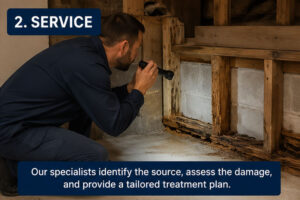
What Does Dry Rot Look Like?
Dry rot can produce several different signs depending on how advanced the problem has become.
Potential warning signs include:
- Cracked or damaged timber
- Timber that has become brittle
- Shrinkage of wooden components
- Distorted or weakened timber
- Fungal growth
- Musty smells
- Discoloured wood
- Fine fungal strands
- Fruiting bodies
- Timber deterioration around damp areas
- Damage to floorboards or joists
Not every damaged piece of timber has dry rot, however.
Other problems, including wet rot, woodworm and general moisture damage, can produce some similar symptoms.
For that reason, professional inspection can be useful where the cause of timber deterioration is uncertain.
Can Dry Rot Spread?
Dry rot can develop beyond the timber where it was first identified.
The fungus can produce fungal strands that grow through suitable materials in search of additional sources of moisture and timber.
This means that simply treating one visible area may not address the complete problem.
A proper investigation should consider the wider area around the affected timber and identify potential moisture sources.
Is Dry Rot Dangerous?
Dry rot is primarily a property and timber problem. Its main concern is the damage it can cause to wooden components within a building.
If important structural timber becomes severely deteriorated, the condition of floors, joists, beams, roof timbers or other components may be affected.
The significance of the problem depends on factors such as:
- The amount of timber affected
- The location of the damage
- The extent of fungal growth
- The source of moisture
- How long the problem has been present
- Whether structural timber has been affected
If you discover suspected dry rot, obtaining an appropriate professional assessment can help determine the extent of the problem.
Where Can Dry Rot Be Found?
Dry rot can occur in many parts of a property where suitable moisture conditions exist.
Common areas include:
Floor Joists
Moisture beneath floors or around poorly ventilated areas can contribute to timber deterioration.
Floorboards
Floorboards can become damaged where moisture has entered the floor structure.
Roof Timbers
Roof leaks can create damp conditions around rafters, beams and other timber components.
Skirting Boards
Skirting boards can be affected where moisture is present around walls and floors.
Door Frames
Timber around doors can deteriorate where moisture enters from outside or where damp conditions persist.
Window Areas
Water penetration, condensation and defective seals can contribute to moisture around timber window components.
Dry Rot in Older Properties
Older properties can contain extensive timber structures, including traditional floor systems, roof timbers and timber joinery.
This does not mean that every older property has dry rot, but timber condition and moisture management are important considerations when investigating suspected decay.
If you own an older property in Essex and notice damaged or deteriorating timber, a professional inspection can help establish what is causing the problem.
What Is the Difference Between Dry Rot and Wet Rot?
Dry rot and wet rot are both forms of fungal timber decay, but they are not the same condition.
The appearance and behaviour of the fungi can differ, and the appropriate remedial approach depends on the specific cause and extent of the decay.
Some symptoms can look similar to an untrained eye, so it is important not to assume that all rotten timber is affected by dry rot.
A specialist inspection can help distinguish between different forms of timber deterioration.
How Is Dry Rot Treated?
The correct treatment depends on the individual property and the extent of the problem.
A dry rot investigation may involve identifying:
- The affected timber
- The extent of fungal activity
- Sources of moisture
- Areas requiring timber repair
- Any conditions contributing to continued deterioration
Treatment may involve addressing moisture problems, removing severely damaged timber, carrying out appropriate timber repairs and taking measures to reduce the risk of recurrence.
The exact approach should be determined following an appropriate inspection.
Why Is Early Detection Important?
Identifying suspected dry rot at an early stage can make it easier to establish the cause and determine the extent of the affected area.
Ignoring damaged timber can allow an underlying moisture problem to continue.
If you notice unusual smells, damaged timber, fungal growth or unexplained deterioration, it is sensible to investigate the cause rather than simply covering or replacing the visible damage.
Dry Rot Surveys in Essex
We cover areas including:
- Chelmsford
- Southend-on-Sea
- Colchester
- Brentwood
- Billericay
- Maldon
- Rayleigh
- Rochford
- Wickford
- Braintree
- Epping
- Loughton
- Waltham Abbey
- Buckhurst Hill
- Chigwell
- Witham
- Great Dunmow
- South Woodham Ferrers
- Canvey Island
- Hockley
- Tiptree
- Halstead
If your location is not listed, contact us to discuss your requirements.
When Should You Arrange a Dry Rot Survey?
Consider arranging a professional inspection if you notice:
- Persistent damp
- Timber that appears damaged or weakened
- Unexplained fungal growth
- Musty smells
- Cracked or distorted timber
- Damaged floorboards
- Deteriorating joists
- Water leaks affecting timber
- Signs of moisture around wooden structures
A survey can help determine whether the problem is dry rot, another form of timber decay or a different moisture-related issue.
Frequently Asked Questions
What exactly is dry rot?
Dry rot is a fungal form of timber decay that can deteriorate wood in buildings. It is associated with damp or persistently humid conditions and can affect timber in various parts of a property.
Does dry rot need moisture?
Yes. Moisture is an important factor in the development and continuation of dry rot. Identifying and addressing the source of moisture is therefore an important part of investigating the problem.
Can dry rot spread?
Dry rot can develop beyond the area where the first signs are noticed. This is why investigating the surrounding timber and identifying the moisture source is important.
Can dry rot damage structural timber?
Yes. If dry rot affects structural timber such as joists, beams or roof timbers, it can cause deterioration that may require professional assessment and repair.
Is dry rot the same as wet rot?
No. Dry rot and wet rot are different forms of fungal timber decay. Some symptoms can appear similar, so professional assessment may be necessary to identify the cause accurately.
Can dry rot be treated?
Dry rot can often be addressed through appropriate remedial work, but the correct treatment depends on the extent of fungal activity, the affected timber and the underlying moisture conditions.
How do I know if my property has dry rot?
Possible warning signs include damaged or weakened timber, fungal growth, musty smells, cracking, shrinkage and unexplained timber deterioration. However, these symptoms can have other causes, so professional inspection may be appropriate.
Suspect Dry Rot in Your Property?
If you are concerned about possible dry rot, don’t ignore unexplained timber deterioration or persistent moisture problems.
Dry Rot Essex provides dry rot surveys, inspections, treatment and timber repairs across Essex.
Call 07379 221549 to discuss your property or arrange a professional survey.
Dry Rot Essex
1 Woodhouse Lane
Chelmsford
CM1 7EU
Telephone: 07379 221549
Email: info@dryrotessex.co.uk